
AI Tools for Backend Development: Code Generation vs. Specialized AI Agents
Imagine a world where backend applications are spun up at the push of a button—where telling an AI assistant "Build me an API for managing inventory" yields a production-ready solution in seconds. A world where developers are no longer develop code, but take the lead in product development, orchestrating entire applications with the support of sophisticated AI tools. This might sound futuristic, but thanks to rapid advancements in AI and the newest AI tools for backend development, it's slowly becoming the reality.
Introduction
As Co-Founder of APICHAP—a platform that instantly creates APIs (including backend logic) using AI—I find this emerging opportunity very exciting. In one of my recent talks at API World in Santa Clara, I had the chance to discuss the latest trends in our sector. Today I want to share the insights I presented regarding these emerging trends and the newest AI tools for backend development. Especially, as the landscape is currently dividing into two main approaches:
- AI Code Generation: Tools that generate raw code from your prompts.
- Specialized AI Development Agents: Domain-focused platforms that independently handle the creation of specific applications with limited and focused functionality.
Before we explore each approach, let's look at the bigger picture: the current market trends around AI-driven development.
Market Trends: AI tools for backend development
Recent surveys and reports confirm that AI is reshaping how we build software—especially on the backend:
1. Accelerated Adoption
A 2024 survey by GitHub reveals that more than 97% of developers already use AI-powered code generation tools.
2. Usage based on Use Cases
A key highlight from this GitHub survey is the significant role of AI in enhancing developers' skills. AI is widely used for learning new programming languages, reading and understanding legacy code, and generating specific components, such as test cases. Notably, over 98% of participants who have used AI at least once reported leveraging it for these purposes.
3. Increasing Technical Debt
According to Google's 2024 DORA report, while a 25% rise in AI adoption accelerates code reviews and enhances documentation, it also comes with a downside—a 7.2% drop in delivery stability, showing that the possibility to quickly generate code can be intriguing to forget about code quality. An important issue that we will get back to later.
AI Code Generation vs. Specialized AI Agents
Now that we have the context, let's delve into the two main branches of AI-driven backend development.
AI Code Generation
AI code-generation tools have begun transforming how developers prototype and build features. By inputting natural language prompts, these tools can churn out boilerplate code or even complete functionalities in seconds, saving hours—or sometimes days—of manual work.
Why it's the future:
- Speed: Prototyping becomes almost instantaneous.
- Accessibility: Non-developers can participate more easily in the development cycle.
- Scalability: Teams can iterate faster on new ideas.
A few tools helping developers to generate code:
- GitHub Copilot and Cursor — Tools helping developers to write code faster with an AI assistant directly in the IDE
- LLMs such as OpenAI, Perplexity or Mistral AI — Writing code snippets and helping you search solutions for errors and exceptions in your code.
- Tools like bolt.new — That help you to build the full code for apps from scratch
The Limitations: Unpredictability and Maintenance
But as with any nascent technology, AI code generation isn't without its drawbacks. The code an AI generates can sometimes be unpredictable—imagine you asked an AI image generator to create a picture of "a delicious pizza," and one time it gives you a salami pizza, the next time a Hawaiian pizza. Both are technically "pizza," but differ wildly in content and style.


Likewise, when you let AI generate code from the same instructions at different times, you might end up with slightly different (or even significantly different) implementations. This unpredictability means:
- Inconsistent results: You might not always get the same code for the same prompt.
- Maintenance challenges: Without a clear framework, future developers (or even the same AI) may struggle to maintain consistency or interpret the generated logic.
- Technical debt: Each time you let the AI write new code for a feature, it's like adding a new developer's perspective to the codebase—leading to varied coding styles and potential conflicts in architecture.
This is why experienced developers remain crucial. Human oversight ensures that software architectures stay consistent, stable, and maintainable over time. AI can assist, but it's not yet at a place where it can autonomously manage large, evolving projects without human intervention.
Specialized AI Agents
While AI code generation offers a broad approach—almost like having a junior developer for every feature—another trend is emerging: specialized AI platforms. These platforms focus on a single domain or task but go deeper, often removing the need for developer oversight altogether in that specific domain.
Enter the "AI Agent" Paradigm
Think of them like AI agents, purpose-built to handle a specific category of software problems:
- Higher accuracy in a narrow field: Because they're specialized, these tools are less prone to randomness.
- No developer knowledge needed: A well-designed platform can abstract away the complexities, so a non-technical user can still get professional results.
- Managed updates and maintenance: Users don't have to worry about the underlying codebase or being locked into old, unmaintained software libraries. The platform updates automatically to keep the tool relevant.
APICHAP: The Specialized Platform for APIs
At APICHAP, we've positioned ourselves as a specialized AI development agent for creating APIs—and the backend logic that powers them—within seconds. Here's how it addresses common challenges:
- Natural Language Input — Simply describe the API you need: "I want an API to manage a product catalog with endpoints for adding, updating, and deleting products. Store those products in my Azure SQL database."
Our AI takes care of the configuration, database schemas, and security layers automatically. - Managed Maintenance — Once your API is live, APICHAP handles future updates, library upgrades, and security patches. You don't have to worry about stale dependencies or out-of-date architectures.
- Accelerated Iterations — Need new features or endpoints? Just revise your request, and APICHAP updates your backend without the headache of manually refactoring code.
- Reduced Technical Debt — Because the platform enforces consistent best practices, you avoid the piecemeal approach of AI code generation tools—which can lead to code sprawl.
Conclusion
With AI reshaping backend development, the choice often boils down to AI code generation versus specialized AI agents. Code generation offers unparalleled flexibility and speed but can introduce maintenance burdens. Specialized AI platforms provide reliability and ease-of-use but may limit deep customization.
No matter which route you choose, one thing is clear: AI isn't here to replace developers—it's here to empower them. These tools offer a unique opportunity for teams to automate repetitive tasks, streamline back-end workflows, and free up developers to focus on innovation.
If you're ready to dive into the specialized approach for APIs, check out APICHAP and experience how we're making AI-driven backend creation accessible to everyone.
About the Author
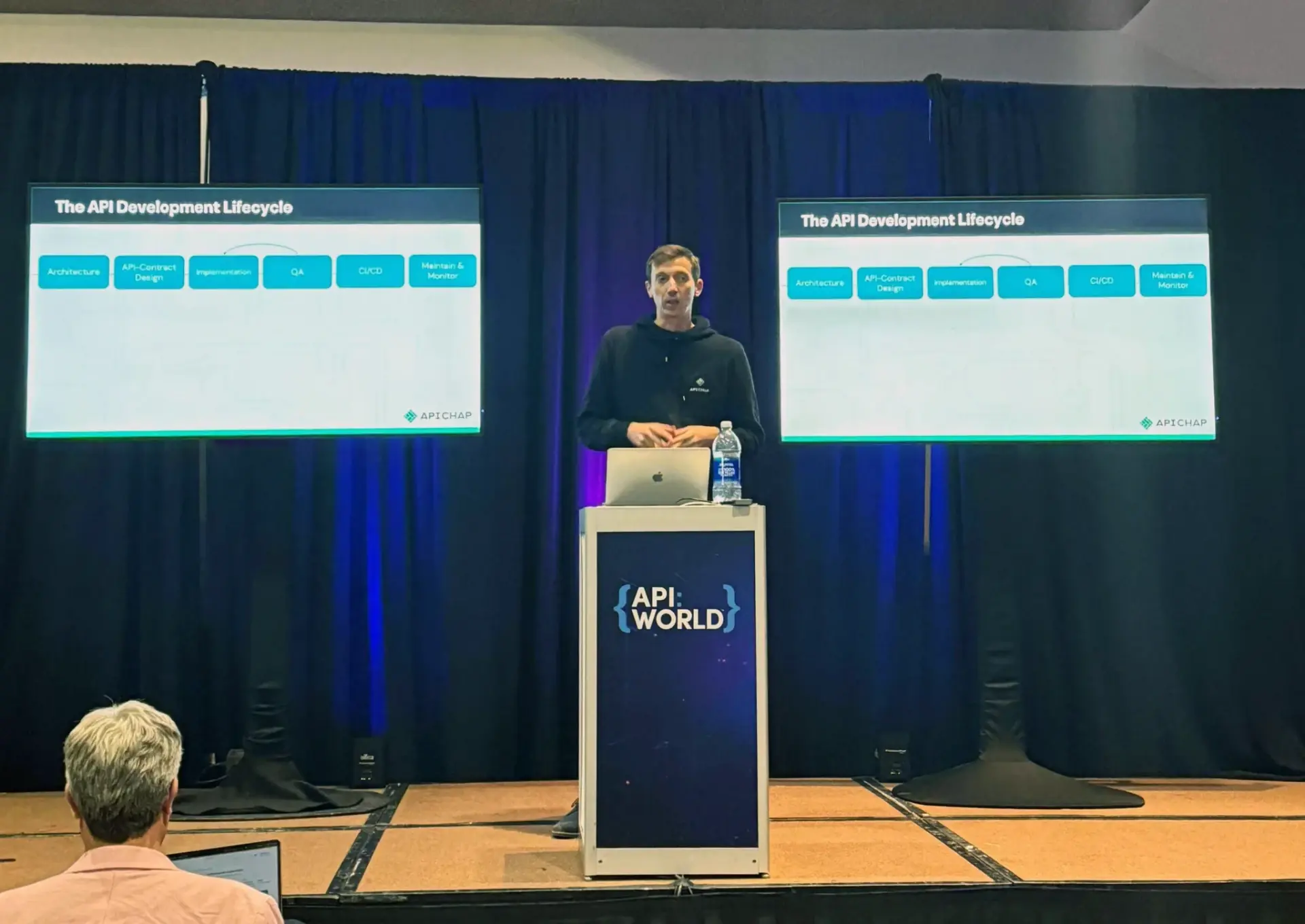

Dominik Rampelt — Co-Founder of APICHAP
Dominik Rampelt is Co-Founder of APICHAP, entrepreneur, and a passionate API/back-end developer. He recently spoke on "How AI Redefines Backend Development in the Future," sharing real-world insights into how AI is accelerating code creation and transforming the day-to-day life of developers. With a focus on simplifying backend tasks and unlocking innovation, Dominik believes the right AI tools can free developers to tackle big-picture challenges—without getting bogged down in boilerplate code.
"It's not about replacing human creativity with AI; it's about harnessing AI to free us for higher-level thinking and problem-solving." — Dominik Rampelt